Table of ContentsGarage Door Spring RepairSupplemental Instructions Torsion Spring InstallationBest Garage Door Spring ReplacementAdjusting Garage Springs: A Short Primer
17 Slide the spring to the center bracket above the garage door. 8. 18 Examine to make sure the end bearing plate is not leaning. In some cases the angle supporting the bearing plate fatigues, causing the bearing to lean. Correct the alignment of if needed. On single-spring garage doors an end bearing plate that leans ought to be braced with angle or lumber.
19 Inspect the bearing and lube or replace as required. 9. 1 Slide the drum on the shaft. Move the shaft into the bearing. Line up the marks made previously. 9. 2 Finger-tighten the set screws into their original imprints. Turn the drum as needed to find the slots. 9.
It ought to not turn if you have actually finger-tightened the set screws properly into the initial grooves. If you did not mark your drums and you can't find the original http://martinuime914.bravesites.com/entries/general/how-to-replace-your-garage-door-s-torsion-springs-like-a-pro imprints in the shaft, finger-tighten the set screws up until the screws fulfill the shaft. 9. 4 Slide the end of the shaft into completion bearing plate.
Add an extra 1/4 turn if you might not discover the original set screw indentations in the previous action. Heavier wood garage doors might need an extra 1/4 turn. Care: Under-tightening the drums could trigger the drum to slip and the door to cock or fall. Over-tightening the set screws could harm the shaft or drum, resulting in the very same problems.
How To Adjust A Garage Door Spring – Your Resource
9. 5 A regular problem for do-it-yourselfers and unskilled garage door technician is getting the end of the cable television to correctly seat in the slot of the cable drum. I usually bend the end of the cable television 90 degrees with my needle nose pliers as shown. 9. 6 Flexing the cable will assist you avoid problems with the tip at the end of the cable television catching on completion bearing plate and triggering the cable to come off and the garage door to jam, cock, or fall.
Also the edge of the cable television stop must not be indicating the side as shown. The cable tip need to fit totally inside the drum, with the rounded part dealing with out so the tip can't scrape completion bearing plate. 9. 7 After placing the cable in the drum, pull down on the drum to tighten up the cable around the external raised groove of the drum.
8 Twist the garage door shaft to tighten up the cable on the drum. While twisting, vise grip the shaft as shown to keep the cable tight on the drum. The top of the vise grip must be tight versus the garage header. This will keep the cable television snug on the very first drum while you set up the cable television on the other drum and place it in location.
That one grip can conserve numerous hours of walking back and forth and needing to level garage door emergency repair and re-level the garage door after winding the torsion springs. 9. 9 Go to the opposite of the garage door and place the end of the cable television into the drum. Rotate the drum till the cable television is tight.
How Many Turns To Put On Your Garage Door Springs
 Replace A Garage Door Spring Only After You Read This
The marks should line up. If they do not, find out why and remedy the issue. It might be a stuck cable television, the garage floor might have moved, or the vertical angle that helps support the bearing plate may have loosened up and moved. Numerous garage doors have been installed with a gap between a drum and a bearing plate.
9. 10 Finger-tighten the drum set screws till the drum will not turn. 9. 11 Tighten up the set screws an additional 1/4 to 1/2 turns as on the other side. 9. 12 It is now time to protect the torsion springs in the middle. For various reasons, numerous installers will balance out the center bracket numerous inches from the center of the door.
If you have a slotted center bracket, eliminate the vise grip and lube the shaft where it turns inside the bushing. Position the shaft so it is the exact same distance from the header as it is at each end. The shaft should be straight and parallel to the header. 9.
The shaft needs to be free to slide sideways inside the bearing. Submit the shaft if required. Lube the bearing. Notification that only one bearing is needed for two torsion springs. This bearing keeps the shaft from rubbing versus the within of the stationary cones and on the center bracket.
Garage Door Maintenance Tips
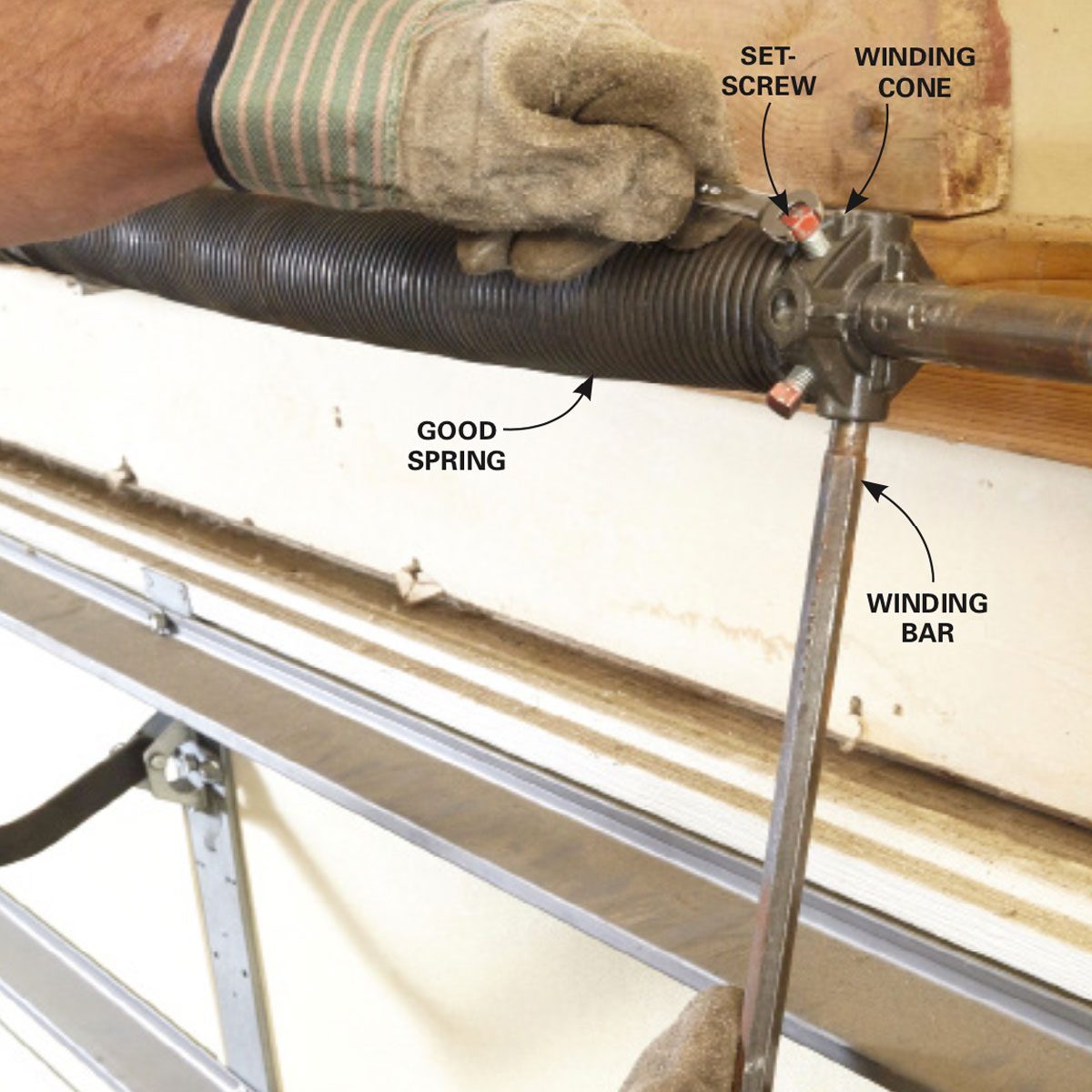
If so grease the shaft where it will be rubbing the bracket and the insides of the cones. 9. 14 Slide the springs to the bracket. Double-check to make sure you have the right wound spring on the left side hanging a garage door and the left wind spring on the right side. Turn the springs up until completions are facing you.
At the winding cones at the opposite ends, the spring wire punctuates. If not, reverse the springs. About when a month we get a call from a diy client who starts the conversation with, "I wound the garage door spring to about 6 turns and the spring came loose from the cone." We typically refer them back to this step and suggest they change their springs.
 Garage Door Adjustments You Might Need To Make
 Garage Door Springs Repair Bowie Maryland
15 Set up the bolts to secure the stationary center cones to the center bracket. Position the shaft here so it is the exact same range from the header as the shaft is at each end. Finger-tighten the nuts up until the stationary cones are flush against the center bearing plate. Forcing the cones by tightening up the bolts may break a cone if it is catching on a bearing.
Protect the bolts. 9. 16 If you can not get the fixed cones to finger-tighten against the center bracket, we recommend installing washers in between the winding cone that houses the bearing and the spring bracket. This is a common problem with torsion springs on older Windsor garage doors since their steel bearings are often larger and they extend beyond the fixed cone.